


Loading the content... Loading depends on your connection speed!

The latest news and views from the Bennetts team

Featuring the latest news on the coffee industry and business insight from senior members of the Bennetts team.

Bennetts > Blog

BENNETTS ORIGIN REPORT
Find out the latest news from Origin!

ORIGIN TRIP REPORT - VIETNAM 2025

During a short trip back home to Vietnam last December, Hien from our Quality Department visited one of our long-standing supplier partners in Lam Dong Province. Welcomed by cool mountain air and warm hospitality, she gained valuable insights into coffee production at origin. In this newsletter, Hien invites you to join her journey, from the slopes of Lang Biang Mountain through the key stages of processing, all the way to export.

Vietnam is one of the world’s largest coffee producers and the leading producer of Robusta coffee. Coffee cultivation is centred in the Central Highlands, including Dak Lak, Gia Lai, Lam Dong, Kon Tum, and Dak Nong, with additional production in the Northwestern Highlands, notably Son La, and parts of the Central Coast. Robusta accounts for the vast majority of Vietnam’s output, while Arabica is grown in smaller volumes at higher elevations.

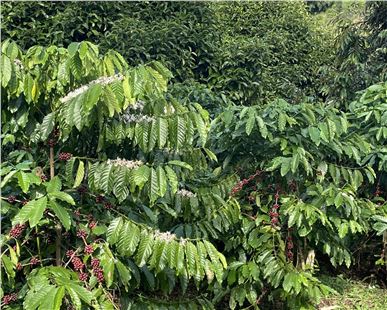
Hien’s visit focused on Lam Dong Province, home to Da Lat and Bao Loc. With its year-round cool climate and high elevations, the region is well suited to Arabica production. Lam Dong is also increasingly affected by extreme weather events such as floods and landslides. Just a week before Hien’s arrival, heavy rainfall caused severe flooding, making access to farms challenging. Together with our suppliers, she precariously navigated winding mountain roads to reach the Arabica farms on Lang Biang Mountain, located about 12 kilometres north of Da Lat at elevations of 1500–1700 metres above sea level. 


Lang Biang Mountain, Lam Dong


The Lang Biang region has a long history of coffee cultivation. Indigenous K’Ho communities have lived in these highlands for thousands of years. Coffee was introduced during the French colonial period and expanded across the Central Highlands due to favourable climate, elevation, and soils. Over time, the K’Ho people developed deep knowledge of coffee farming, strengthening both livelihoods and their connection to the land.

Farms in the area are typically small, averaging 1–2 hectares and managed by family members. The feralit soils, rich in iron and aluminium, require careful management, including the use of lime and fertilisers. Leaf rust has historically been a major challenge, leading to the widespread adoption of Catimor, a rust-resistant, high-yielding Arabica variety that remains dominant today. Other varieties grown include Yellow Bourbon, Caturra, Catuai, and newer hybrid cultivars.

Lang Biang has distinct wet and dry seasons, with the rainy period typically running from May to October. Harvesting usually starting in November and running through to January. December marks the peak of the harvest, when ripe cherries are selectively hand-picked.  Harvest practices may vary between farms. When Hien visited in December, the harvest was in full swing. During this period, picking takes place daily, with workers arriving at farms seeking employment. Depending on the harvesting techniques chosen by farm owners, workers may stay for a short period or throughout the season. At this peak period, farms may employ up to 25 harvest workers, each collecting around 60–70 kilograms of cherries per day.


Harvesting in action!


However, no job is without its challenges, and coffee farming in Lang Biang is no exception. One of the key issues farmers face is inconsistent yield. Coffee trees follow a biennial bearing cycle, producing alternating years of heavy and light crops. As a result, this season, while some farms enjoyed a strong harvest, others experienced yield reductions ranging from 20–30% to as much as 60–70%.

In conversations with farm owners, Hien learned that lower yields this season meant many farmers were unable to fully benefit from the recent rise in coffee prices. For households that rely solely on coffee as their source of income, biennial bearing can lead to significant fluctuations in earnings. To mitigate this risk, many smallholders intercrop coffee with fruit trees such as persimmons, avocados, durian, or mangosteen. By diversifying their crops and income streams, farmers are better able to support themselves during lower-yield years.
 
As part of our supplier’s training programme, farmers have also begun planting persimmon trees for shade. While admiring the farm under the hot mountain sun, Hien met an agronomist who arrived by motorcycle to assess the progress of the shade-tree project. He walked through the farm, documenting the plantings, and spoke with farmers to check in on recent developments. Having been established for only a few months, the persimmon shade trees are progressing well and the project has shown promising early results and is expected to deliver long-term benefits for both coffee quality and farm resilience.


The agronomist checking in with the farm owner


After harvest, coffee is either dried on-farm in parchment or delivered as whole fresh cherry to local collection points, where quality (colour, weight and aroma) is assessed before transport to the wet mill.

At the wet mill, harvested cherries go through several more checks. First, bags are unloaded from the trucks, and a worker takes samples to assess the percentage of dried, unripe, and ripe cherries. A sample is then taken to the quality room for the ‘unripe cherry test’. Here, an experienced worker uses strong thumbs to pulp the green-looking cherries. If the cherry can still be pulped, it is not classified as unripe, giving sellers a little extra margin and ensuring fairer payment for their products.


The unripe cherry test


The selected cherries are then processed immediately to prevent unwanted fermentation. The cherries are first loaded onto an inclined slide, where vibrations help separate leaves, stems, and debris into separate bags. They then move to the destoner machine, where heavier stones sink to the bottom while lighter cherries flow along with the water.

Next, the cherries pass through a sorting machine that separates unripe beans, peaberries, lighter cherries, and insect-damaged beans from the ripe cherries. The ripe cherries then enter a de-pulping machine, which removes the outer skin, followed by a centrifugal washer that uses water pressure to wash away all remaining mucilage using an efficient process that significantly reduces water usage compared to traditional methods. Sometimes work carries on all through the night to ensure the days pickings are processed promptly.
 

Cherry arriving at the wet mill


Drying takes place the next morning on patios. After an initial day under the sun, the parchment coffee moves to a mechanical dryer. Hot air circulates through a rotating drum, drying the beans to a target moisture content of 11–12.5%. The temperature inside is carefully controlled, kept below 45 °C, while the drum rotates gradually and evenly – slow drying helps preserve the beans’ flavours and storage life. Once dried, coffee is transported to the dry mill for hulling, grading, and final quality assessment.
 
The dry mill features a quality room where each batch is cupped prior to export. According to Mr Huy, the Quality Manager, Lam Dong Arabica typically scores around 82 points (while Robusta scores around 78 – 82 points).
 

Mr Huy, the Quality Manager, among Catimor trees


Beyond processing, our supplier operates a Farmer Training Centre (FTC) to support continuous improvement across the supply chain. The centre includes a conference room for meetings and training sessions, a processing area for experimental fermentation trials, a nursery for developing and nurturing new coffee varieties, and a garden featuring coffee and other trees. Agronomists provide guidance on certification processes, soil testing, precision irrigation, and group coaching, and regularly visit farms to monitor progress and gather feedback.

The nursery also serves as a testing ground for new varieties. For Robusta, the traditional variety is Se, known for its small cherries, full body, and bitter cup profile. Hybrids derived from Se—such as Thu Thien, TR9, and TR1—offer lighter body and higher acidity, giving farmers additional options to diversify production and improve cup quality over time.


  The Nursery at FTC                                         Hien visiting the farms in Vietnam


Hien returned from Lam Dong with a strong appreciation for the dedication and care behind every coffee cherry. From the farms to the wet and dry mills, she witnessed firsthand the coordination, skill, and care required to produce high-quality coffee for export.

Her journey highlighted both the challenges and opportunities within Vietnam’s coffee sector. Farmer training programmes, innovative processing techniques, and ongoing trials of new varieties are helping to improve cup quality, diversify income, and strengthen resilience at origin. With continued investment in knowledge, technology, and sustainable practices, Vietnam’s coffee industry is well positioned to elevate quality and strengthen its global competitiveness.


Happy Roasting,
The Bennetts Team  
Took 0 milliseconds
loading...