


Loading the content... Loading depends on your connection speed!

The latest news and views from the Bennetts team

Featuring the latest news on the coffee industry and business insight from senior members of the Bennetts team.

Bennetts > Blog

BENNETTS ORIGIN REPORT
Thursday 19 February 2026 by Marketing - HABFebruary 2026Newsorigin

Find out the latest news from Origin!

ORIGIN REPORT - PERU

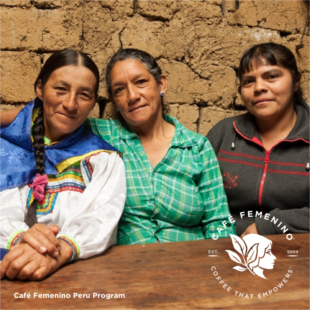
At Bennetts, we believe exceptional coffee should deliver more than a remarkable cup. It should create measurable, lasting impact at origin. In this edition, we are pleased to introduce an upcoming release from the Café Femenino® program at the AMOJU Agrarian Cooperative in northern Peru — a coffee that brings together specialty quality, full traceability and a long standing commitment to gender equity. Bennetts has supported the Café Femenino® movement for more than a decade, and this latest arrival continues that partnership.

Established in 2003 by 464 women in northern Peru, Café Femenino® was created to address a systemic imbalance within coffee growing communities. While women have always played a central role in production, they were rarely recognised or directly compensated for their contribution. In many remote regions, limited financial control and restricted participation in decision making entrenched generational poverty. Café Femenino® disrupted that model by ensuring women are paid directly for their coffee, supporting land ownership in their own names and creating clear pathways to leadership within cooperative structures. What began as a local initiative has since expanded across nine producing countries, providing a commercially viable framework that aligns quality coffee with social progress.


One cooperative advancing this work is AMOJU, founded in 2016 in Jaén, Cajamarca. Today, AMOJU brings together 741 smallholder female producers across the highlands of Cajamarca and Amazonas at elevations between 1,300 and 2,200 metres above sea level. The name “AMOJU,” drawn from the Awajún language meaning freshwater spring, reflects both the geography and the cooperative’s focus on renewal and resilience.

Producers manage an average of 3.8 hectares each, cultivating varietals including Bourbon, Pache Caturra, Catuai, Catimor, Geisha and Pacamara. Harvest runs from April through December, with peak picking between June and October. The region’s biodiversity, mountain microclimates and clean water sources contribute to a cup profile defined by bright acidity, honey, floral aromatics, silky body and a clean, sweet finish.

Quality is built at farm level. Each lot is individually managed, ensuring traceability from cherry to parchment. During harvest, selective hand picking is carried out with the support of seasonal workers to ensure only ripe cherries are processed. Following flotation to remove defects, cherries are pulped the same day and fermented in cement tanks or wooden crates for 20 to 36 hours, depending on altitude. The coffee is then washed with fresh water and sun-dried to 12 percent moisture before being stored in polypropylene sacks on raised wooden platforms within the cooperative’s certified warehouse. AMOJU maintains internationally recognised certifications including Organic, Rainforest Alliance and Fairtrade, supported by strict quality control protocols designed to meet export standards. Beyond coffee, families diversify income through crops such as bananas, oranges and guavas, strengthening food security and resilience.

Through its integration with Café Femenino®, AMOJU extends its impact beyond agronomy. Women participating in the program own and manage their production, receive direct payment and formal recognition, and actively contribute to cooperative governance. Access to agronomic training, technical assistance and improved infrastructure, supports both cup quality and long-term viability.

The social outcomes are tangible. Direct premiums and financial autonomy have enabled women to diversify into small livestock, quinoa production and community micro-loan initiatives. Investment has flowed into children’s libraries, schools, health and nutrition education, literacy programs and human rights awareness. Income is frequently prioritised toward education for both girls and boys, reinforcing generational equity. Women leaders now serve as health promoters in remote communities, delivering first aid and reproductive health education, while practical initiatives such as replacing open fire stoves with ventilated chimney systems have reduced smoke-related illness. Over time, communities have reported reduced domestic violence, improved nutrition outcomes and increased income equality, alongside greater female representation in elected leadership roles within their associations.

For roasters focused on responsible sourcing, this coffee represents more than a certification set. It offers transparent supply chains, certified organic production and a demonstrable model of social reinvestment, all anchored by specialty grade quality.

Our next shipment of Fairtrade Organic Café Femenino® coffee from AMOJU is landing next month. For pricing and volume information, please speak with your Bennetts Account Manager.

Choose coffee that delivers in the cup and at origin.

 Happy Roasting,
The Bennetts Team
Took 0 milliseconds
loading...